
Tarmac driveways have gained popularity in recent years due to their numerous environmental benefits. This article aims to explore the various ways in which choosing a tarmac driveway can contribute to a more sustainable future. By examining the recyclability of tarmac, its potential contribution to a circular economy, and the environmental impact of constructing and maintaining driveways, we can better understand the positive implications of this choice.
Tarmac, also known as asphalt, is a widely used material in the construction industry due to its durability and flexibility. One of the key advantages of tarmac driveways is their recyclability. When a tarmac driveway reaches the end of its lifespan, it can be milled and recycled back into new tarmac. This process not only reduces the demand for new raw materials but also minimises waste and landfill space.
By opting for a tarmac driveway, homeowners can actively participate in the circular economy by supporting the reuse and recycling of materials, ultimately reducing their environmental footprint.
Recyclability of Tarmac Driveways
The recyclability of tarmac driveways contributes to their environmental benefits, generating a sense of hope and responsibility among individuals towards sustainable solutions.
Tarmac, also known as asphalt, is a material that can be recycled and reused multiple times without compromising its quality. This recyclability feature reduces the need for new materials and reduces waste in the construction industry. By choosing a tarmac driveway, individuals actively participate in the circular economy, where resources are continuously reused and recycled.
One of the key reasons for the recyclability of tarmac driveways is the durability of the material. Tarmac is known for its strength and long-lasting performance, making it a popular choice for driveways and roads. This durability allows tarmac to withstand heavy loads and harsh weather conditions, leading to a longer lifespan compared to other driveway materials.
As a result, when a tarmac driveway reaches the end of its life, it can be milled and recycled, transforming it into new tarmac for future use. This process not only conserves valuable resources but also reduces the energy consumption and carbon emissions associated with producing new asphalt.
Overall, the recyclability of tarmac driveways contributes to the sustainable use of materials and plays a significant role in reducing the environmental impact of construction activities.
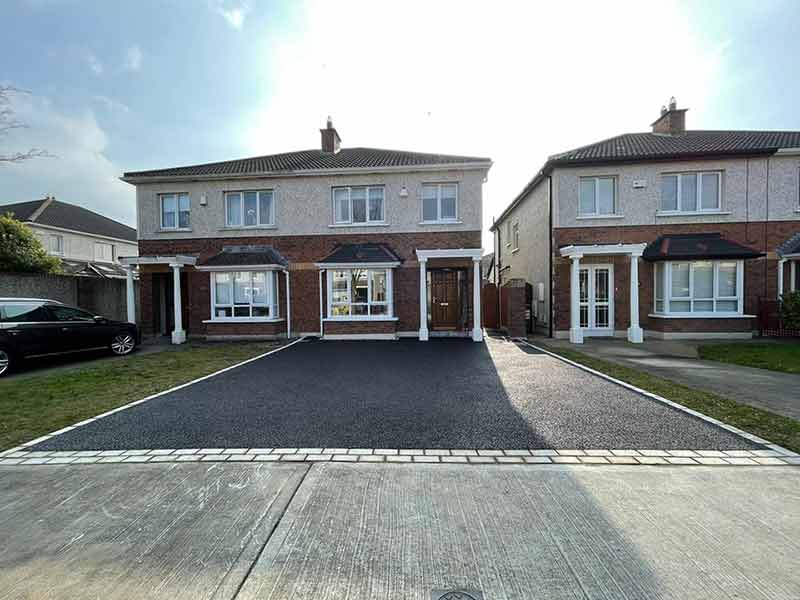
Contribution to a Circular Economy
One example of the positive impact of incorporating tarmac driveways into our infrastructure is the potential for reducing waste by using recycled materials, akin to repurposing discarded puzzle pieces into a beautiful mosaic. Tarmac, also known as asphalt, is a versatile material that can be produced using recycled aggregates. By using recycled aggregates in the production of tarmac, we can reduce the demand for virgin materials such as gravel and sand, which helps preserve natural resources. Additionally, incorporating recycled materials into tarmac production reduces the amount of waste that would otherwise end up in landfills. This not only helps to minimise the environmental impact of waste disposal but also contributes to the conservation of landfill space.
To better understand the contribution of tarmac driveways to a circular economy and waste reduction, a comparison can be made between the linear and circular systems. In a linear system, materials are extracted, used, and then disposed of as waste. On the other hand, a circular system aims to minimise waste generation and keep materials in use for as long as possible. The table below illustrates the key differences between these two systems:
| Linear System | Circular System |
|---|---|
| Waste generation is high | Waste generation is minimised |
| Resources are extracted and used in a linear manner | Resources are used in a closed loop system |
| Materials are disposed of in landfills | Materials are reused, recycled, or repurposed |
| High environmental impact | Reduced environmental impact |
By incorporating tarmac driveways made with recycled materials, we can move towards a more circular system. This not only reduces waste generation but also helps create a sustainable and resource-efficient infrastructure. As we strive for a more sustainable future, embracing closed loop systems and waste reduction measures is crucial, and tarmac driveways offer a practical and eco-friendly solution in this regard.
Environmental Impact of Constructing and Maintaining Driveways
When constructing and maintaining driveways, it is important to consider the ecological consequences of these activities.
One of the key environmental impacts associated with driveway construction and maintenance is water consumption. Traditional driveway materials, such as concrete and asphalt, are impermeable surfaces that prevent rainwater from being absorbed into the ground. This leads to increased water runoff and can contribute to water pollution and flooding.
In contrast, tarmac driveways have a porous surface that allows water to infiltrate into the soil, reducing the amount of runoff and helping to replenish groundwater supplies. This can be particularly beneficial in areas with limited water resources or where stormwater management is a concern.
Another significant environmental impact of constructing and maintaining driveways is air pollution. The production and transportation of traditional driveway materials, such as concrete and asphalt, can release significant amounts of greenhouse gases and other air pollutants. These emissions contribute to climate change and air quality degradation.
On the other hand, tarmac driveways are often made from recycled materials, such as asphalt millings, which reduces the demand for new materials and the associated carbon footprint. Additionally, the installation of tarmac driveways requires less energy compared to traditional materials. This further reduces the overall environmental impact and helps to mitigate air pollution.
Considering the environmental impact of constructing and maintaining driveways is crucial for sustainable development. Tarmac driveways offer significant advantages over traditional materials in terms of water consumption and air pollution. By choosing tarmac driveways, individuals can contribute to water conservation efforts and reduce their carbon footprint. Moreover, the use of recycled materials in tarmac production further enhances the environmental benefits.
Overall, tarmac driveways provide a more environmentally friendly option for homeowners and contribute to a greener future.
Promoting a More Sustainable Future
Promoting a more sustainable future requires a careful examination of the ecological consequences associated with the construction and maintenance of driveways. One way to achieve this is by choosing tarmac driveways, which offer various environmental benefits.
Tarmac, also known as asphalt, is a durable and recyclable material that reduces carbon emissions and preserves natural resources.
Tarmac driveways contribute to the reduction of carbon emissions through their manufacturing process and their ability to reduce energy consumption. The production of tarmac involves the heating and mixing of aggregates, such as crushed stone and sand, with a binder, typically bitumen. Compared to other driveway materials, the production of tarmac requires less energy and emits fewer greenhouse gases. Additionally, tarmac driveways have a smoother surface, which reduces rolling resistance and enhances fuel efficiency for vehicles. This results in reduced carbon emissions from transportation, helping to mitigate the environmental impact associated with driveways.
Furthermore, tarmac driveways have a long lifespan and can be recycled, preserving natural resources. When a tarmac driveway reaches the end of its life cycle, it can be recycled by crushing and reusing the materials. This process, known as asphalt recycling, reduces the need for virgin materials and minimises the extraction of natural resources such as aggregates and bitumen.
By choosing tarmac driveways, homeowners can contribute to the preservation of natural resources and reduce the environmental footprint associated with driveway construction and maintenance.
Frequently Asked Questions
What is the cost comparison between a tarmac driveway and other types of driveways?
The cost comparison between tarmac driveways and other types of driveways can vary depending on factors such as materials used and installation requirements. However, tarmac driveways are generally considered to be more cost-effective and durable compared to alternatives.
How long does a tarmac driveway typically last before it needs to be replaced?
The life expectancy of a tarmac driveway can vary depending on various factors such as usage, maintenance, and climate. However, on average, tarmac driveways can last between 15 to 20 years before they need to be replaced.

Are there any specific maintenance requirements for tarmac driveways?
Maintenance requirements for tarmac driveways include regular cleaning, filling cracks, and sealing to prevent water damage. Common damages include potholes and fading. Proper maintenance can extend the lifespan of a tarmac driveway.
Can a tarmac driveway be easily repaired if it gets damaged?
Tarmac driveways can be easily repaired using various methods such as patching, resurfacing, or overlaying. Regular maintenance tips include filling cracks, sealing the surface, and avoiding heavy machinery to prevent damage.
Are there any specific regulations or permits required for installing a tarmac driveway?
When considering the installation of a tarmac driveway, it is important to be aware of the regulations and permits that may be required. Compliance with these requirements ensures a legal and proper installation process.
Call us to get a price quote on a tarmac. Contact us today on 07595 510190 to receive a free quote or visit our website.

Tarmac Driveways In Nottingham: The Benefits {Tarmac can be used for many different surfaces. It's used on roads, playgrounds, and Read more

{Four Simple Ways Tarmac Driveways Can Make Your Life Easier in Nottingham.|These are 4 Easy Ways Tarmac Driveways can Make Read more

{5 Best Tarmac Driveway Designs in Nottingham|5 Best Tarmac Driveway Design Ideas in Nottingham|5 Best Tarmac Driveway Options in Nottingham|5 Read more